
For many travellers, seeing Antarctica wildlife is the moment the White Continent comes to life. Penguins gather along a rocky shore. A seal rests on an ice floe. A humpback whale surfaces nearby, while an albatross glides above the Southern Ocean.
On an Antarctic Peninsula expedition, wildlife is part of the landscape, never a staged encounter. The animals move according to the season, the sea and the ice. That unpredictability is part of what makes seeing them so memorable.
Penguins on the Antarctic Peninsula
Penguins are among the most recognisable animals in Antarctica. Around the Antarctic Peninsula and South Shetland Islands, travellers may see gentoo, chinstrap and Adélie penguins gathering in colonies along the shore.
Their routines unfold at their own pace: adults returning from the sea, chicks waiting in the colony, and lines of penguins making their way between nesting sites and the water. From a Zodiac, you may also see them porpoising through the waves.
Every colony has its own rhythm. Watching from a respectful distance gives you time to notice the small details and let the scene take shape without disturbing it.
Seals resting on the ice
A quiet shape on an ice floe may turn out to be a seal, resting between trips into the water. Around the Antarctic Peninsula, travellers may encounter Weddell, crabeater and leopard seals.
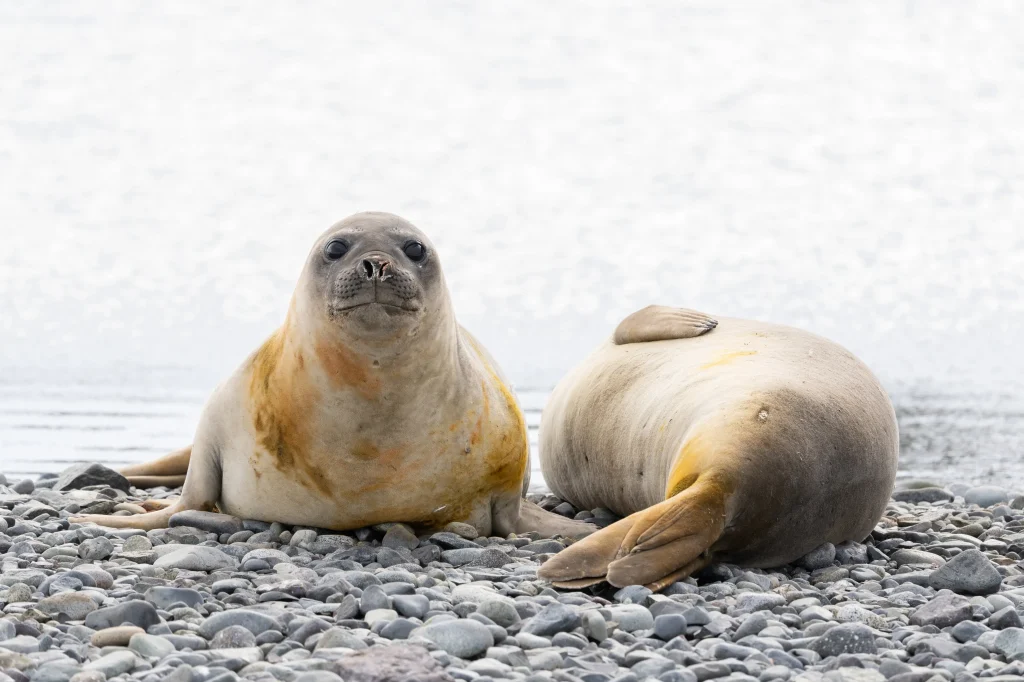
Some sightings happen from the ship as it moves through icy channels. Others come during a Zodiac excursion, where a seal may be resting on an ice floe or along a rocky shore. These moments offer a closer look at life in the Southern Ocean, while reminding us to give wildlife space.
Humpback whales in Southern Ocean waters
For many travellers, seeing a humpback whale in Antarctica is one of the journey’s defining moments. Humpback and minke whales may surface near the expedition vessel or appear during a Zodiac excursion.
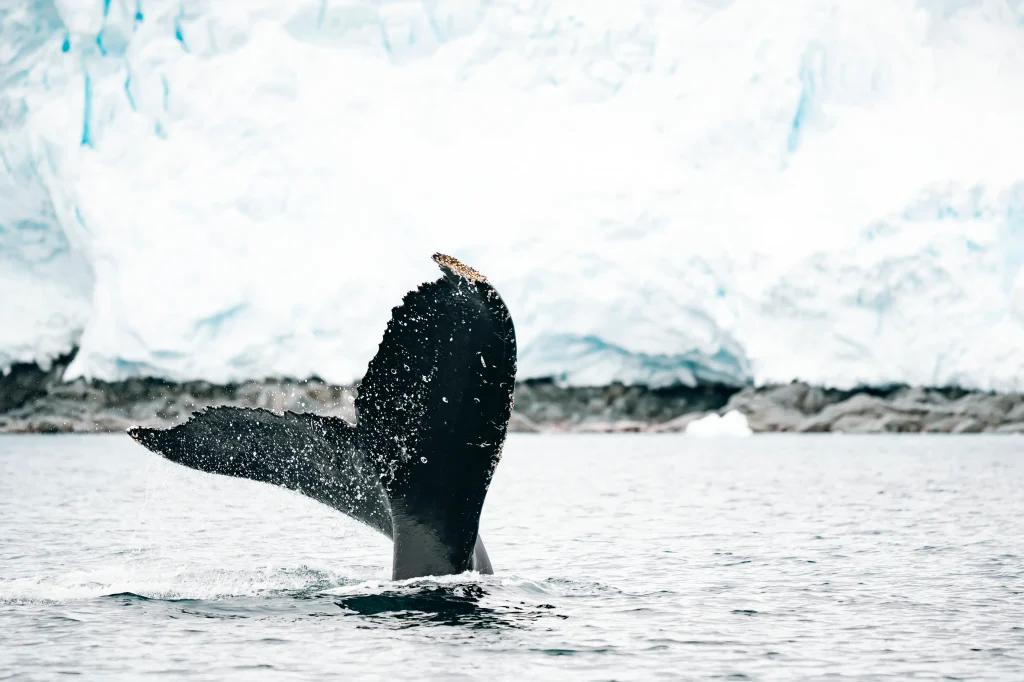
A glimpse can be brief: a dark back rising through the water, a plume of breath, or a tail lifting before the whale disappears beneath the surface. Sometimes the encounter lasts longer. Either way, the setting—a still bay, a glacier beyond the water, and the low sound of the sea—makes the sighting feel entirely its own.
Whale sightings depend on conditions and wildlife movement. No two days, or expeditions, unfold in quite the same way.
Albatross above the Southern Ocean
The wildlife experience begins before the first landing. During the journey across the Southern Ocean, seabirds may follow the vessel, including albatrosses gliding over the waves on long, outstretched wings.
Watching an albatross ride the wind is a different kind of encounter from seeing wildlife ashore. There is no colony to approach or shoreline to explore—only open water, changing light and a bird moving with remarkable ease across the sky.
Four days of discovery
On Away&Co’s Classic Antarctica air-cruise, the planned exploration spans four days around the South Shetland Islands and western coast of the Antarctic Peninsula. Guests travel by Zodiac for guided shore excursions, with the expedition team adapting plans to the weather and conditions.
The ship carries up to 76 guests, with a fleet of 10 Zodiacs and expert polar guides. This small-ship format brings guests closer to the landscape and creates time to learn about the wildlife they encounter.
Wildlife encounters, guided with care
An Antarctica cruise offers opportunities to observe animals in their natural surroundings, from penguin colonies on shore to whales and seabirds at sea. Sightings vary with weather, season and location.
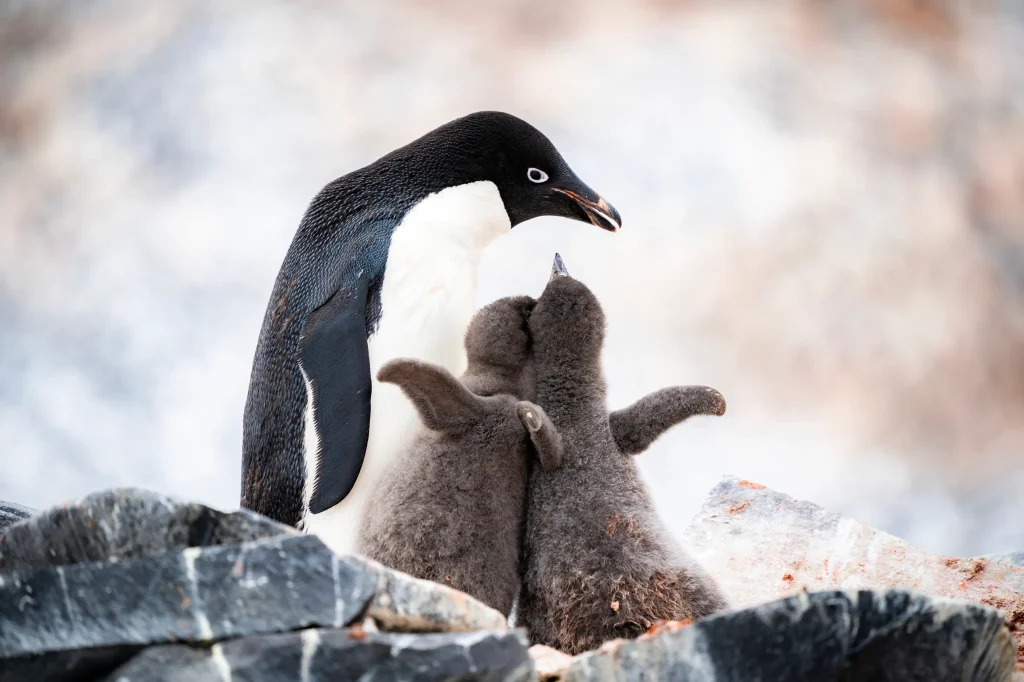
The guiding principle is simple: give animals space, follow your expedition team’s instructions, and never touch or feed wildlife. This keeps the focus where it belongs—on observing Antarctica without disrupting its fragile environment.
Experience Antarctica’s wildlife with Away&Co
Antarctica’s wildlife is never a checklist. It is a collection of moments: penguins moving between sea and shore, seals resting on drifting ice, a whale surfacing nearby, or an albatross crossing the horizon.
Explore Away&Co’s Antarctica journey and discover the wildlife of the White Continent at a thoughtful pace.