
The most important sound in Antarctica is not the crack of an iceberg or the call of a penguin. It is the quiet. Switch off the engines, step into a small rubber boat, and the silence arrives all at once, broken only by water lapping at the hull and the faint creak of ice.
That is the moment that makes an Antarctica small ship expedition unlike any other kind of travel. It is also only the beginning of the day.
So come aboard. Here is how a day on the White Continent really unfolds, from the first announcement over the ship’s speakers to the last glow of evening light on the ice.
Why Small Ships Change Everything
Antarctica is not a destination you simply tick off. It is a place you are admitted to, carefully and in small numbers. Industry guidelines limit how many people can be ashore at any one time, and the largest ships cannot land their passengers at all. That is why small ship Antarctica cruises have become the most rewarding way to meet the continent: fewer guests, more landings, and far more time with the landscape.
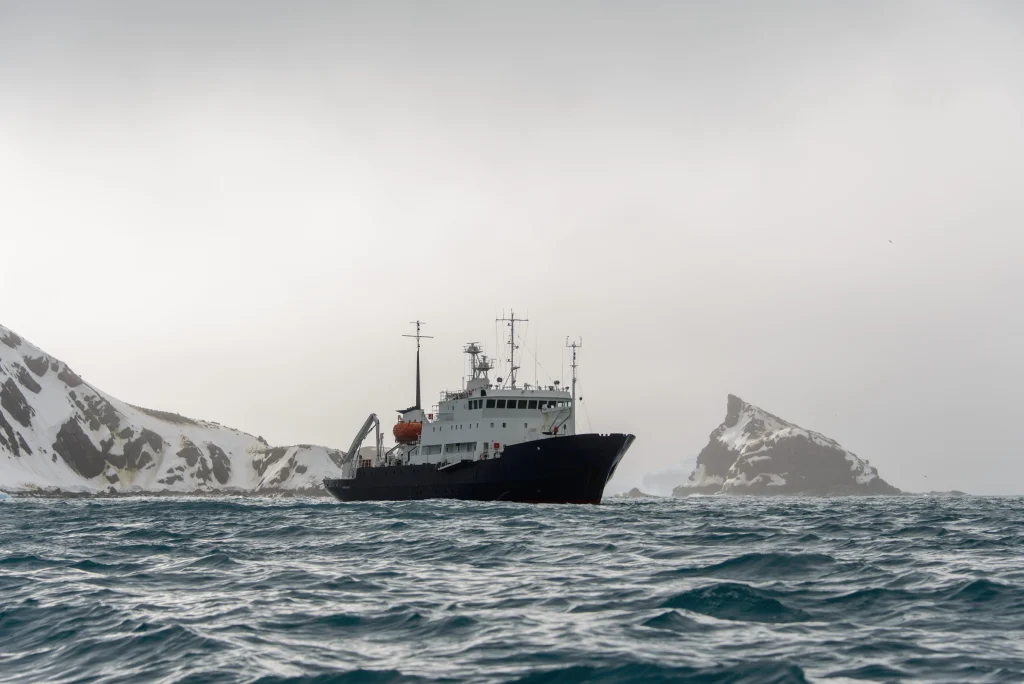
Our Antarctica Air Cruise takes the idea one step further. Instead of crossing the Drake Passage by sea, you fly directly to King George Island and step aboard a polar expedition ship, arriving rested, present, and ready to explore. A fleet of 10 Zodiacs means landings are quick, so everyone goes ashore together and spends more of the day on land rather than waiting for a turn.
The Journey In: From Punta Arenas to the Ice
Your expedition begins in Punta Arenas, Chile, with a briefing on the guidelines every visitor to Antarctica follows. Then comes the flight, around two hours, ending on King George Island. As you step off the plane, the air is sharp and impossibly clean. You walk to the shore, past research stations flying their national flags, and board your first Zodiac, which carries you out to the ship that will be home for the next few days.
It is a quietly dramatic start. A few hours earlier, you were in a town at the edge of Patagonia. Now you are standing on the seventh continent.
A Day on the White Continent, Hour by Hour
No two days in Antarctica are alike, because the weather, the ice and the wildlife decide the plan. But a typical day looks something like this:
- Morning briefing. Over breakfast, the expedition team shares the plan: where you will land, what you might see and what the conditions will allow. It is part weather report, part storytelling.
- Suiting up. Waterproof boots, which are provided on loan, go on first, followed by your own waterproof outer layers and a life jacket. Boots are washed before and after each landing to protect the continent’s fragile ecosystem.
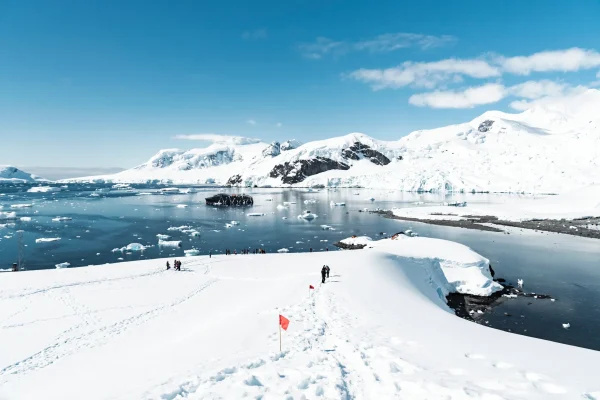
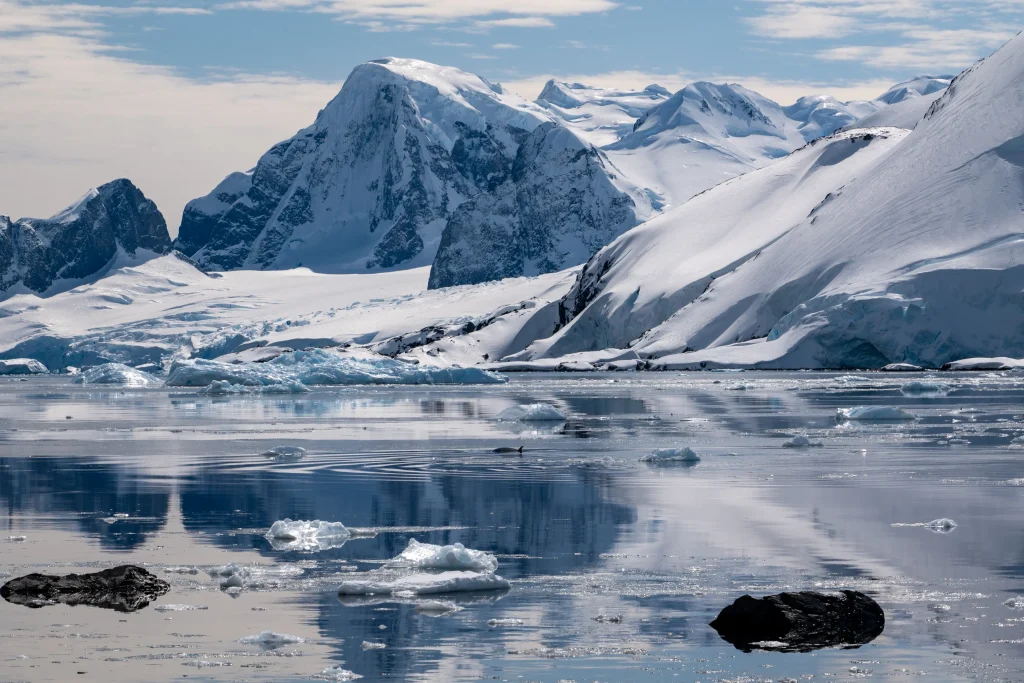
- The landing. You step from the ship into a Zodiac, glide across glassy water between floating ice, and come ashore on a beach few people will ever see. The Antarctica Zodiac landing experience is the heart of every day.
- Ashore. Expert polar guides lead the way along marked routes and share the stories of the place. Keep your distance from the wildlife and let the animals decide how close to come. Often, they are curious enough to approach you.
- Afternoon. A second outing might be a Zodiac cruise among icebergs, where blue ice towers overhead, and seals rest on floes. Back on board, there are lectures from the expedition team, a warm meal, and a lounge full of guests comparing photographs.
- Evening. In the Antarctic summer, the light lingers late. Many guests find themselves on deck long after dinner, watching the sky turn gold over the ice.
Wildlife Watching in Antarctica
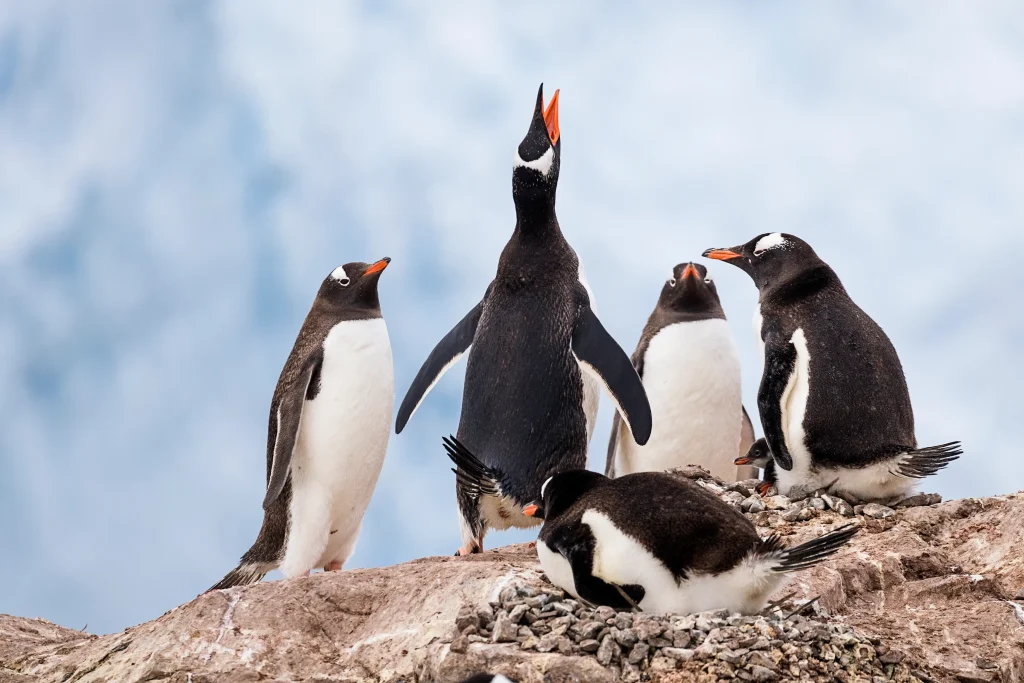
Wildlife watching in Antarctica is nothing like a safari. There is no straining for a glimpse in the distance. The animals are remarkably unafraid of visitors, and the encounters are quiet, close and unhurried.
On the Antarctic Peninsula and the South Shetland Islands, expect colonies of gentoo and chinstrap penguins, seals hauled out along the shore, and seabirds wheeling above the cliffs. Out on the water, humpback and minke whales may surface beside the Zodiacs, and the silence makes every breath audible.
Timing shapes what you see. Early in the season, penguins are courting and building nests. By midsummer, the colonies are busy with chicks. Later, whales are at their most active. Each month has its own character, which is why choosing the right departure matters.
Flexibility Is the Real Luxury
There is one rule in Antarctica, and every guide will tell you the same: no plan survives the weather. Wind can close a landing site, a pod of whales can rewrite the afternoon, and flights depend on conditions at King George Island. That is why every journey has a contingency plan, and why the best travellers arrive with open minds.
Embrace it. Some of the most memorable moments, a seal gliding past the Zodiac or a sudden break in the cloud, are the ones nobody scheduled.
Planning Your Antarctica Small Ship Expedition with Away&Co
A few practical notes help. Waterproof boots for landings are provided on loan, but guests are encouraged to bring their own waterproof outer layers for Zodiac outings. Pack warm layers, sunglasses, and sunscreen too, as the sun reflects fiercely off the snow.
An Antarctica small ship expedition rewards careful planning, and that is where we come in. Away&Co designs every journey around you, from choosing the right departure to shaping the days around it, so that the logistics fade away and the wonder remains.
Explore our Away to Antarctica page for inspiration, or speak to our experience designers about the right journey for you.
Somewhere down there, a penguin colony is waking up, the ice is shifting in the light, and a small boat is waiting at the water’s edge. All that is missing is you.