
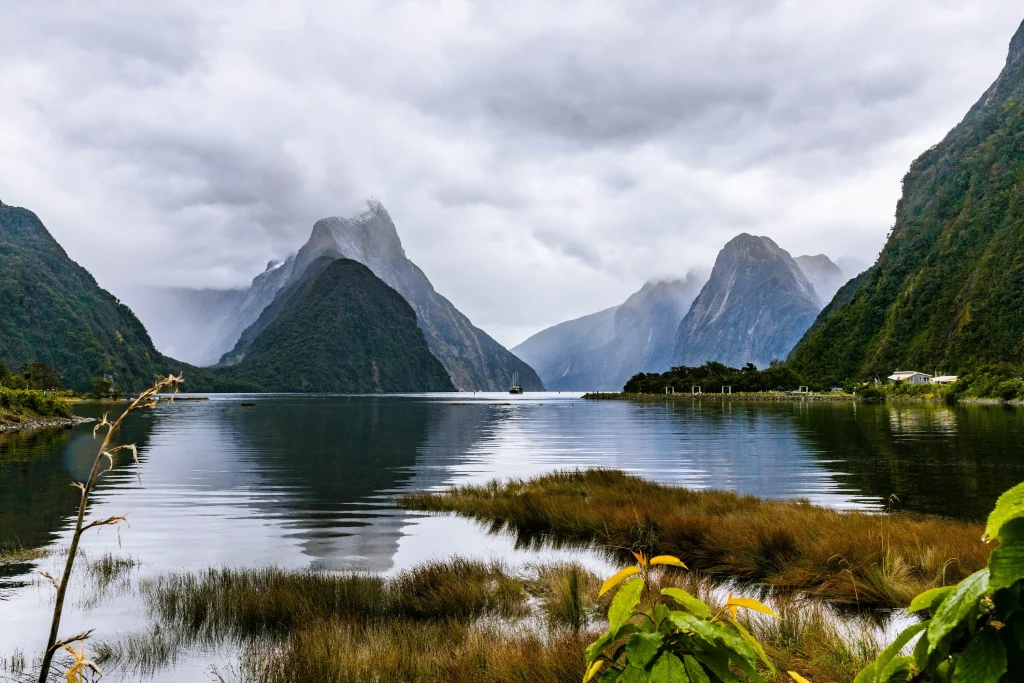
At one point on the Milford Road, the world seems to run out of room. The valley narrows, the cliffs lean in, and low cloud settles on the peaks as if invited. Nobody in the car is checking the time.
That is Fiordland, and it is the opposite of a tick-the-box destination.
Most travellers meet Fiordland and Milford Sound on a single, hurried day trip from Queenstown. It is spectacular, but it is a little like reading only the last page of a very good book. This guide shows you the slower route: more time on the water, more stories from the people who know it, and far more of the quiet that makes New Zealand’s fjords unforgettable.
Why Fiordland Rewards the Slow Traveller
Tucked into the south-west corner of the South Island, Fiordland National Park is built on a grand scale: glacier-carved valleys, ancient rainforest clinging to near-vertical rock, and waterfalls that appear out of nowhere after the rain. It is also one of the wettest places on Earth. Milford Sound alone receives around seven metres of rain a year, and that is precisely the point. The rain is what brings the cliffs to life.
This is where slow travel experiences in New Zealand come into their own. Slow travel is not about doing less. It is about letting a place unfold at its own pace: a long cruise instead of a short one, a walk with a guide who can read the valley, an evening when the day boats have gone, and the fjord feels like yours alone. At Away&Co, we call ourselves curators of experiences rather than a travel agency, and Fiordland is exactly the kind of place where that difference shows.
Milford Sound, Beyond the Day Trip
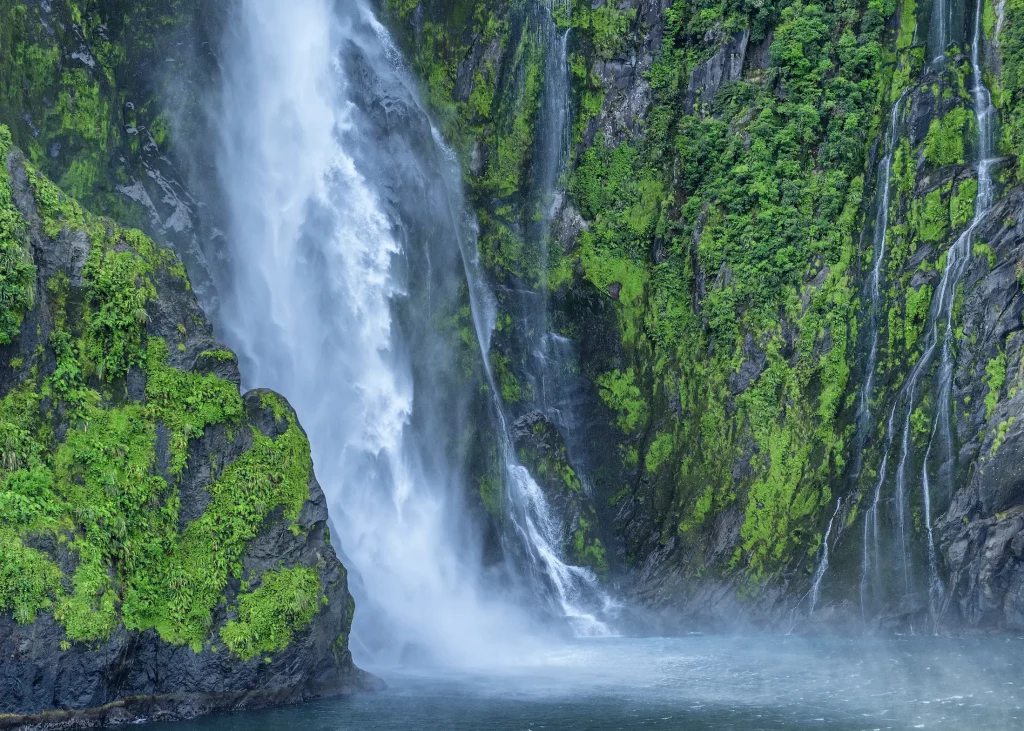
Here is a small secret: Milford Sound is not a sound at all. It is a fjord, carved by glaciers rather than a river, and known to Māori as Piopiotahi. Mitre Peak rises almost vertically from the water, while Stirling Falls and Lady Bowen Falls tumble down cliffs that make the boats below look like toys.
The journey in is part of the experience. The drive from Te Anau takes around two hours, passing through the Eglinton Valley, the glassy Mirror Lakes and the Homer Tunnel before the fjord finally reveals itself. Build in time to stop. Every pull-in on this road is a photograph waiting to happen.
Then, if your plans allow, do what most visitors do not: stay. An overnight cruise on the fjord is a completely different experience. Once the day boats head back, the water stills, the light softens, and the sound of distant waterfalls replaces the engines. Waking to mist lifting off the peaks is the kind of moment people talk about for years.
Things to Do in Fiordland
Milford Sound may be the headline, but the supporting cast is just as memorable. When you plan the things to do in Fiordland, consider these:
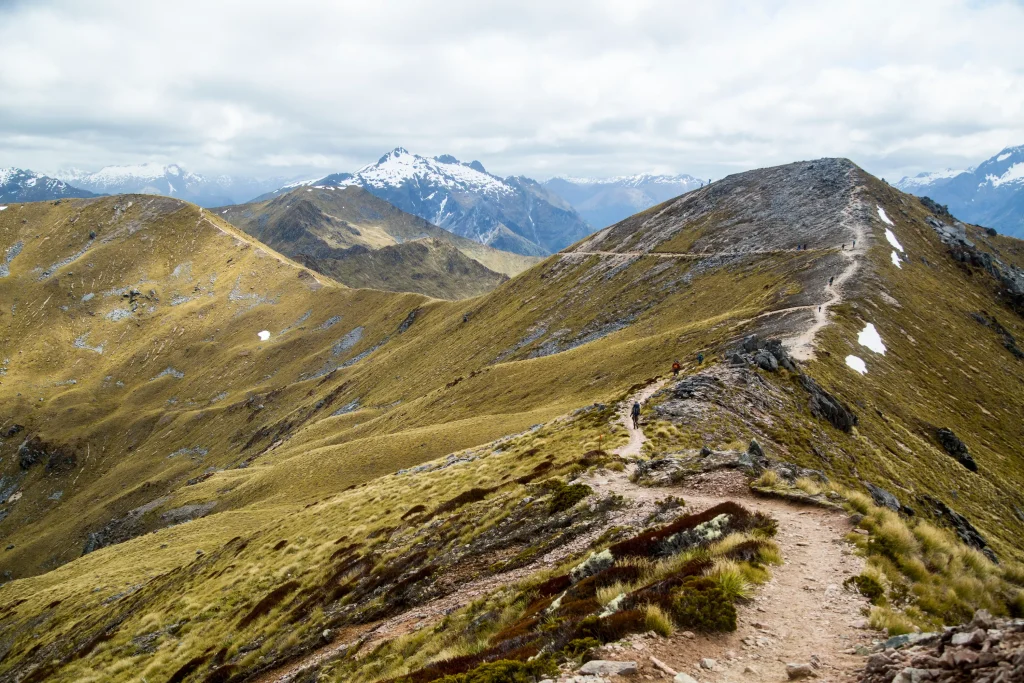
- Walk with a local guide. Fiordland is home to three of New Zealand’s Great Walks: the Milford, Routeburn and Kepler Tracks. Even a day on one section of trail, with a guide who brings the geology, birdlife and Māori stories to life, changes how you see the landscape.
- Slip into Doubtful Sound. Reached by crossing Lake Manapouri and travelling over Wilmot Pass, it is the quieter, more remote of the two great fjords. Staying overnight gives you the stillness that day visitors miss.
- Look for wildlife. Fur seals sunbathe on the rocks, bottlenose dolphins sometimes race alongside the boats, and the rare Fiordland crested penguin, known as tawaki, nests in the rainforest.
- Meet the glowworms. Near Te Anau, a boat ride into a limestone cave lit by thousands of tiny lights is a gentle, magical way to end a day.
- See it from above. A scenic flight over the fjords and peaks gives you a sense of scale that no road can.
Best Time to Visit Milford Sound
The good news is that Milford Sound has no off-season. The better question is what you would like to experience.
- Summer (December to February): The warmest weather and the longest days, but also the busiest period. Book early and consider an early-morning or late-afternoon cruise.
- Autumn (March to May): Thinner crowds and cooler temperatures, with waterfalls at their most dramatic after sustained rain.
- Winter (June to August): Snow on the peaks, crisp air and the quietest fjord of the year.
- Spring (September to November): Fuller waterfalls, lengthening days and wildlife on the move, just ahead of the summer crowds.
Whatever the season, pack a proper waterproof jacket and treat the rain as a feature, not a flaw. Rain falls on roughly half the days of the year here, and when the cloud comes down and waterfalls appear on every cliff face, many travellers say it is Milford Sound at its most magical. The weather can change within minutes, so leave a little flexibility in your plans.
Planning Your New Zealand Fjords Travel Guide, the Away&Co Way
Think of this as your New Zealand fjords travel guide with room to breathe. A few principles make the difference between seeing Fiordland and truly experiencing it:
- Give it at least three nights. Base yourself in or near Te Anau, with one day for Milford Sound, one for Doubtful Sound or a guided walk, and one with nothing planned at all.
- Pair it with Queenstown. Begin or end with lakeside dining and Central Otago wines, so the wild and the indulgent balance each other.
- Choose stays with a sense of place. Boutique, owner-run lodges turn a good trip into a story worth retelling.
- Travel with people who know it. Local guides, skippers and hosts are the difference between a view and an understanding.
That is how we approach every journey at Away&Co. There are no off-the-shelf itineraries, only journeys designed around you, from the pace of your mornings to the way you like your days to end. Explore our Away to New Zealand destination guide for more inspiration, or speak to our experience designers about shaping a journey that feels entirely your own.
Fiordland and Milford Sound have a way of making time stretch. The only question is how long you will give them.